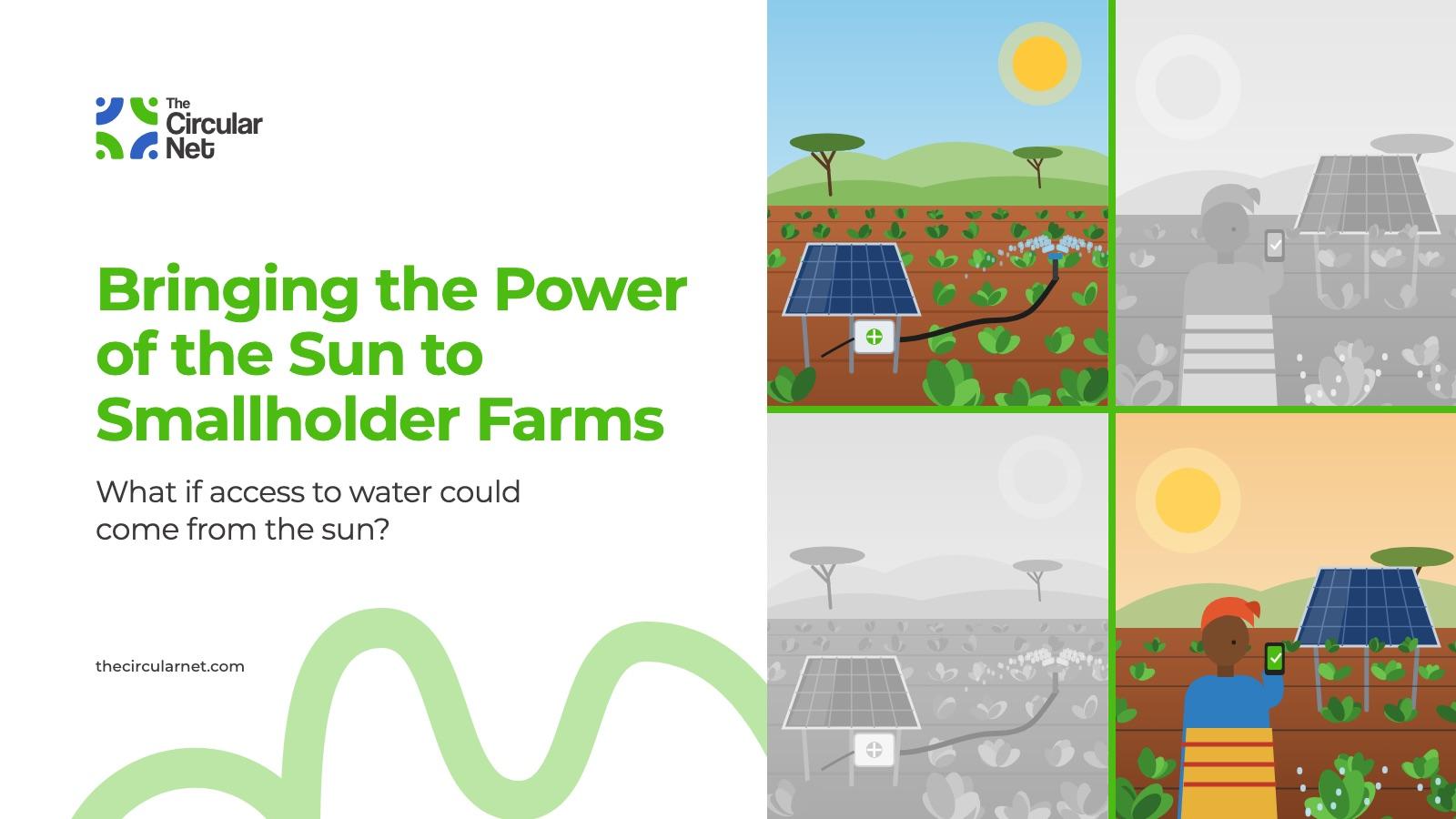
What happens when farmers can no longer rely on rainfall to sustain their crops? And what if the solution to accessing water could come from the sun?
For most smallholder farmers in Kenya, the harvest is decided by a forecast they cannot control. Unpredictable rainfall and prolonged dry spells make agricultural production increasingly challenging. Traditional irrigation methods, particularly diesel-powered pumps, can also come with high operating costs.
Kenyan social enterprise SunCulture is addressing these challenges by making solar-powered irrigation more accessible to smallholder farmers.
Founded in 2012, the company designs and provides solar-powered irrigation systems that enable farmers to pump water for their crops without depending on conventional fuel-powered equipment.
Through its RainMaker irrigation systems and a pay-as-you-go financing model, SunCulture helps farmers access solar irrigation technology without having to pay the full cost upfront. Its offering also includes installation, training and ongoing support.
The value →
- Environmental: Reducing dependence on fossil-fuel-powered irrigation pumps and supporting the transition to cleaner energy in agriculture.
- Agricultural: Providing farmers with greater control over water access, allowing them to irrigate beyond periods of rainfall and explore more flexible farming practices.
- Economic: Helping farmers manage fuel-related operating costs while making irrigation technology more accessible through flexible financing.
- Climate resilience: Supporting smallholder farmers in adapting their agricultural practices to increasingly unpredictable weather conditions.
However, sustainable irrigation also requires responsible water management. Access to solar-powered pumps must go hand in hand with protecting water resources to ensure that increased irrigation does not lead to over-extraction.
SunCulture's work illustrates how renewable energy can extend beyond electricity access to address challenges in agriculture, strengthen climate resilience and create opportunities for rural livelihoods.
At The Circular Net, we celebrate African innovations demonstrating how locally relevant solutions can address environmental challenges while creating value for communities.
What other African innovations are using clean energy to transform agriculture and livelihoods?